

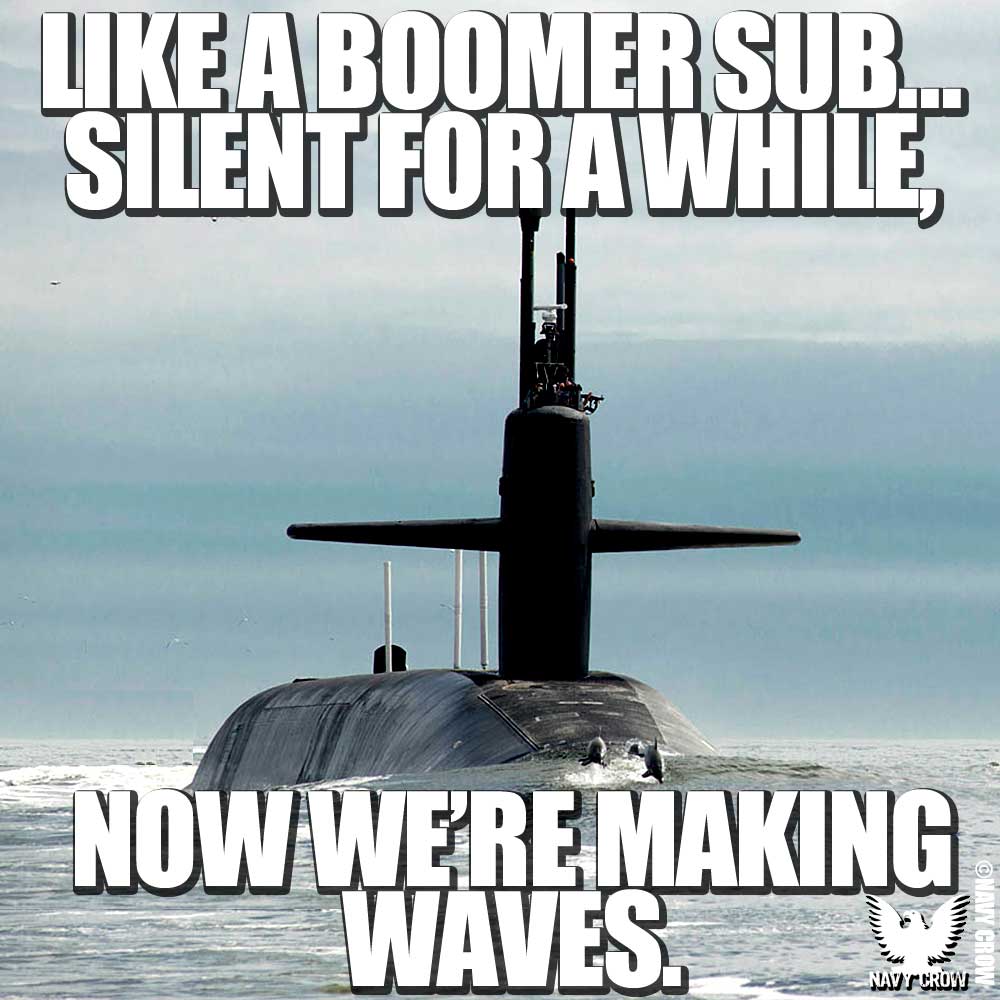
On August 1, 2025, President Donald Trump announced on social media that he ordered two U.S. nuclear ballistic missile submarines (SSBNs) to position in “appropriate regions” near Russia. This decision followed provocative rhetoric from Dmitry Medvedev, deputy chairman of Russia’s Security Council and former Russian president (Business Insider).
Medvedev had openly mocked Trump’s ultimatum on Ukraine, invoked Russia’s Cold War-era “Dead Hand” nuclear retaliation system, and warned that America was edging toward war. Trump called these remarks “foolish and inflammatory,” stressing that words—even rhetorical ones—might lead to unintended consequences (Business Insider).
🧭 Why SSBN Deployment Matters
Strategic Signal, Not Operational Disclosure
- SSBN movements are typically secretive, used by the U.S. as a high-level deterrent signal when publicly revealed.
- President Trump’s transparency about their positioning signals a psychological escalation—a message of readiness and resolve (The Daily Beast, Reuters).

Cold War Echoes in Modern Strategy
- Russia’s more explicit nuclear rhetoric—including references to escalate-to-de-escalate doctrine and second-strike deterrence systems—has heightened alarm among Pentagon officials that Moscow is “playing with fire” (Reuters).
⚠️ Risk of Escalation to Thermo‑Nuclear Exchange
Words Turning Into Weapons
- Experts warn that mutual nuclear taunts lower the threshold for miscalculation.
- Once a deterrent posture turns kinetic, escalation can spiral rapidly into retaliation—even when initial intentions are restrained (Reuters, National Review).
Human Stakes: Worsening Death Estimates
- Modeling by Rethink Priorities estimates 51 million deaths as the base scenario for a U.S.–Russia thermonuclear exchange, potentially rising to 88 million fatalities under higher escalation assumptions (rethinkpriorities.org).
- The nationalist narratives on both sides intensify the risk that rhetoric leads to misaligned escalation rather than diplomacy.
🕊️ What Must Happen to Avoid the Unthinkable
1. Diplomacy Over Public Ultimatums
- High-level direct backchannel negotiation is needed to pause escalation before deterrent posture becomes kinetic.
- Putin has suggested private talks with U.S. envoys, emphasizing quiet diplomacy over public threats (Financial Times).
2. Restraint in Public Statements
- Both sides need to reduce inflammatory language. Modern nuclear threats are more psychological than tactical—but dangerous if miscalculated.
- Former Russian President Medvedev’s escalating “Dead Hand” references deepen distrust—not peace (Financial Times).
3. Reviving Arms Control Measures
- The breakdown of treaties like New START and INF has created instability.
- Arms-control diplomacy—including possible new agreements or constraints—is urgent to signal limits on nuclear escalation (cfr.org).
🧾 Summary Table: Key Scenarios & Impacts
| Element | Potential Outcome if Escalation Continues |
|---|---|
| U.S. submarine deployment | Signals deterrence; risks provoking reactive escalation |
| Russian nuclear rhetoric (Dead Hand) | Increases risk of misread intent or accidental missile use |
| Absence of diplomacy | Elevates path toward kinetic exchange |
| No arms control | Opens door to unchecked nuclear buildup |
☢️ Final Insight
The recent exchange—or saber-rattling—between Washington and Moscow points to a dangerous crossroads. Deploying SSBNs and invoking Russia’s doomsday systems may temporarily deter or impress, but without urgent diplomatic cooling, it dangerously increases the risk of nuclear miscalculation. The odds of a thermonuclear exchange remain low—but not negligible—and the human and geopolitical consequences would be catastrophic.
Avoiding the unthinkable requires measured communication, renewed diplomacy, and clear escalation boundaries—not brinkmanship.